
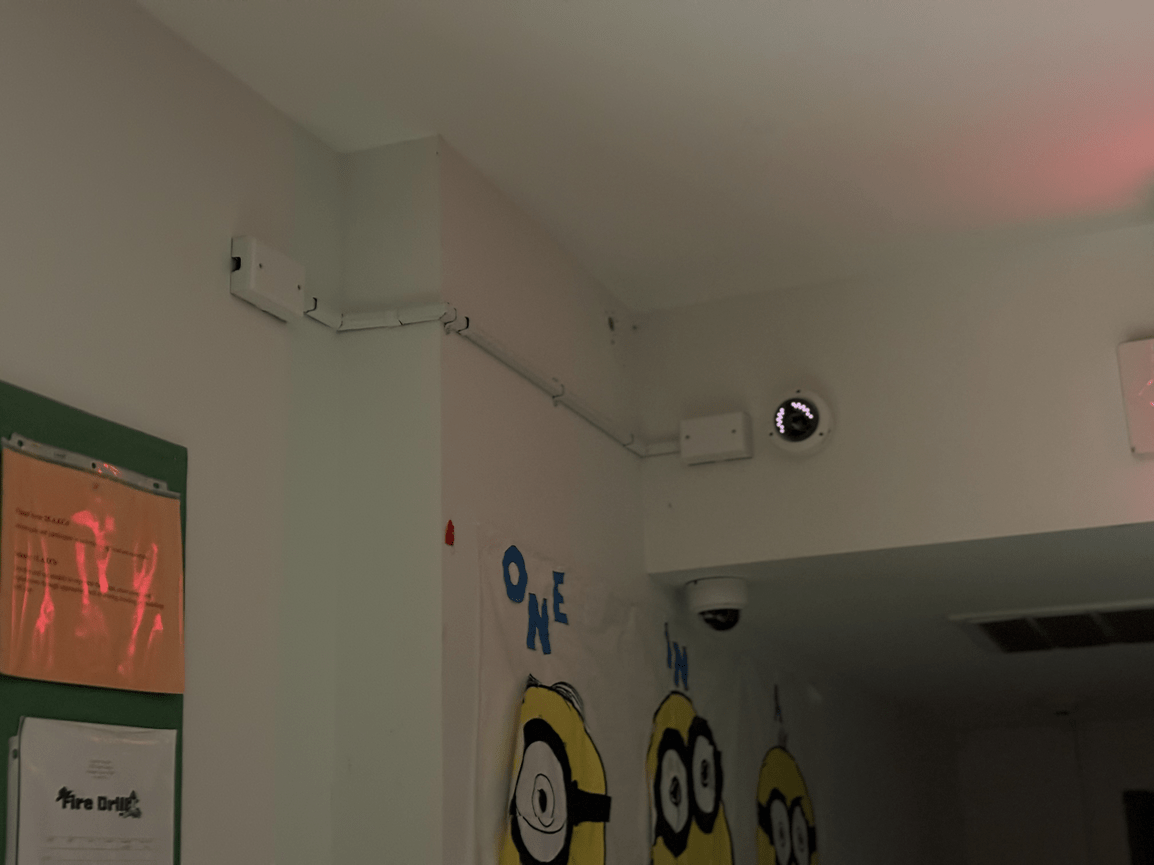
Camera Systems Coordinated With Building Infrastructure
Security Camera Installation in Waukegan for commercial buildings integrating camera placement with structured cabling and conduit systems
Camera installation in commercial renovation projects requires coordination with conduit pathways, power routing, and other low-voltage systems already running through walls and ceilings. Medical office buildings converting to multi-use and multi-tenant properties in the Lake County region require camera placement that covers entry points, common areas, and tenant-specific zones without creating blind spots or routing conflicts with fire alarm, access control, or network cabling. Lake County Data handles camera runs as part of full building infrastructure rather than a standalone installation, which prevents later conflicts when multiple systems compete for the same pathways.
Security camera systems depend on proper cable routing, power availability at each camera location, and network connectivity that supports video bandwidth without degrading other traffic. Placement decisions account for coverage angles, lighting conditions, and mounting surfaces that support camera weight and allow cable entry. Renovation projects complicate this by limiting pathway access and requiring cameras to integrate into finished spaces without extensive demolition.
Schedule an infrastructure assessment to identify camera placement options and confirm that conduit pathways can accommodate camera runs alongside existing systems.
Why Camera Runs Require Pathway Coordination
Camera cables share conduit space with network cabling, fire alarm circuits, and access control wiring, which means planning must account for capacity limits and separation requirements. Power-over-Ethernet cameras simplify installation by eliminating separate power runs, but they add bandwidth load to your network infrastructure. Traditional cameras with dedicated power require coordination between low-voltage and electrical contractors to ensure power and data reach the same mounting location.
After cameras mount and cabling terminates, your building's security coverage functions without gaps or blind spots caused by placement compromises. Video streams reach recording equipment or cloud storage without network bottlenecks that cause dropped frames or degraded resolution. Cameras positioned during infrastructure planning deliver better coverage than units added later as afterthoughts, because pathway access and power availability shape what locations are practical.
Lake County Data integrates camera installation with structured cabling projects on commercial conversions and renovation work, where coordinating trades during the same construction phase prevents rework. Camera placement discussions happen alongside conduit planning rather than after walls close, which improves coverage and reduces installation cost.
What Property Owners Usually Ask
Commercial property managers and building owners in Waukegan ask similar questions when planning camera installations for conversion projects or tenant improvements.
What determines camera placement in a commercial building?
Coverage requirements, mounting surface availability, pathway access for cabling, and power source locations determine where cameras can physically install. Optimal placement balances security coverage with installation practicality.
How do Power-over-Ethernet cameras simplify installation?
PoE cameras receive both data and power through a single network cable, eliminating the need for separate electrical runs and coordination between low-voltage and electrical contractors. This reduces installation complexity and cost, especially in renovation projects where adding electrical circuits is difficult.
Why does camera installation coordinate with other building systems in Lake County projects?
Fire alarm, access control, and network cabling often share the same conduit pathways and ceiling spaces. Installing camera runs during the same project phase prevents capacity conflicts and avoids rework when later systems cannot fit through already-crowded pathways.
What bandwidth do security cameras add to a network?
IP cameras consume bandwidth proportional to their resolution and frame rate. High-definition cameras recording continuously can load a network significantly, which affects cabling specifications and switch capacity when multiple cameras operate simultaneously.
When should camera systems install during a building conversion?
Camera installation sequences with other low-voltage systems during renovation, ideally before ceiling closure or wall finishing. This timing allows flexible camera placement and simpler cable routing than installations attempted after construction completes.
Lake County Data manages camera installation as part of integrated building infrastructure on commercial projects where multiple low-voltage systems require coordination. Call (224) 331-5484 to discuss camera placement options that align with your building's cabling and conduit layout.