
Infrastructure Built for Actual Bandwidth Demands
Structured Cabling Services in Waukegan for commercial buildings requiring certified infrastructure and code-compliant network pathways
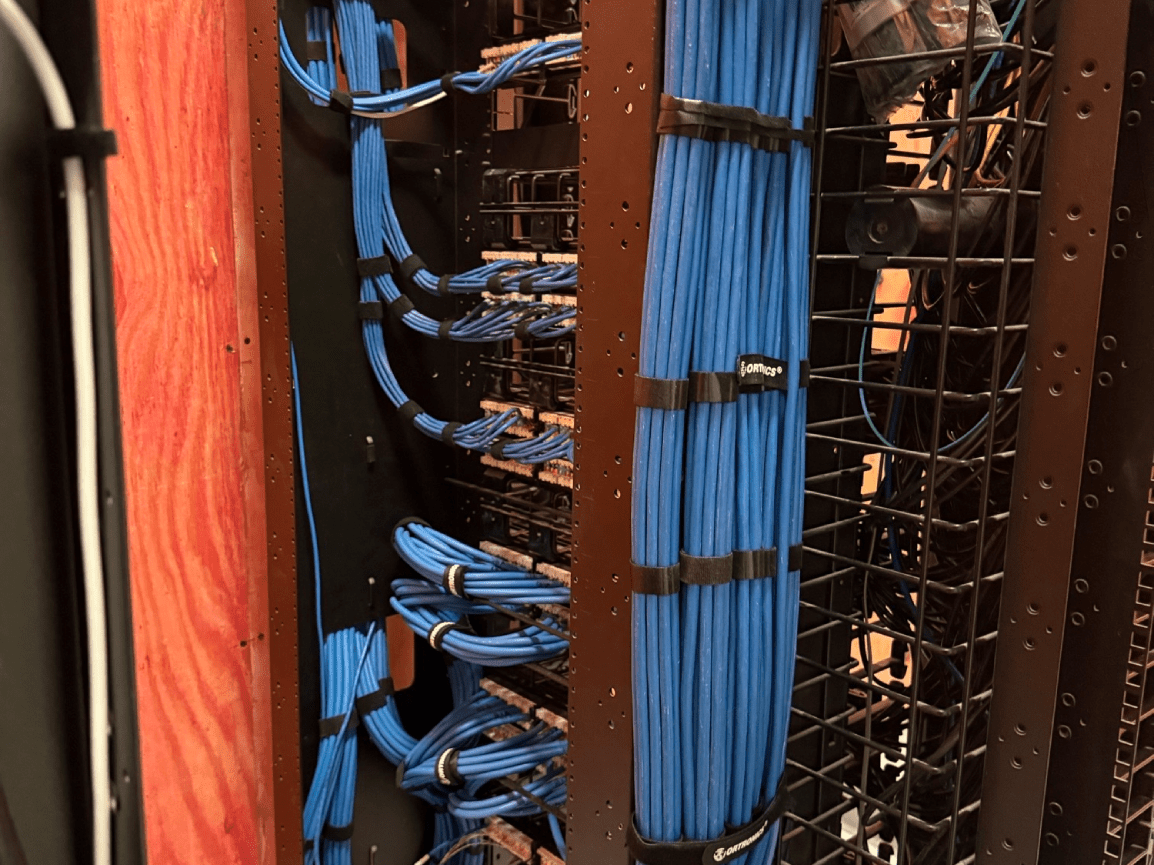
Lake County Data provides structured cabling design and installation for commercial buildings in Waukegan and across Lake County, including medical office conversions and multi-tenant renovation projects. Pathway planning, conduit runs, and cable routing through walls and ceilings follow termination standards and compliance testing protocols. This matters most when existing buildings undergo complete overhauls to support new uses, where cabling integrates into active building systems without halting operations.
Structured cabling addresses the gap between what modern bandwidth demands require and what older commercial buildings were designed to handle. Renovation projects often reveal routing limitations—walls without pathways, ceiling grids not rated for cable weight, or fire-rated separations that require specific conduit materials. The installation process accounts for these constraints while meeting code requirements that govern how cables pass through fire zones and structural barriers.
Schedule a site evaluation to review your building's existing infrastructure and identify specific pathway requirements.
What Proper Conduit Runs Require
Conduit runs determine whether your cabling can support future upgrades or requires complete reinstallation when needs change. Proper runs include pathway sizing that allows cable replacement without demolition, support brackets spaced to prevent sag, and separation from electrical lines to avoid interference. Medical office conversions in the Lake County region typically involve routing cables through spaces originally designed for different occupancy types, which means working around existing HVAC, plumbing, and electrical systems already competing for the same pathways.
Once cabling terminates and testing confirms continuity, your building supports the actual data loads your service provider delivers without bottlenecks at the infrastructure level. Network speeds match what your ISP package provides rather than dropping due to poor termination or inadequate cable specs. Equipment connects where you need it, and future additions follow established pathways rather than requiring surface-mounted workarounds.
Compliance testing verifies that installed cabling meets industry standards for your specified category—whether Cat 5e, Cat 6, or Cat 6A. Testing catches termination errors, signal loss from kinked cables, and crosstalk from improperly bundled runs. Without documented test results, you cannot confirm that your infrastructure actually supports the speeds it was specified to handle.
Questions Before Starting Your Project
Commercial property owners in Waukegan ask similar questions when planning cabling projects for buildings undergoing conversion or tenant improvements.
What happens during pathway planning for a renovation project?
Pathway planning maps cable routes from network equipment locations to each endpoint, accounting for existing structural obstacles, fire-rated barriers, and spaces already occupied by mechanical systems. This step determines where conduit runs, how cables transition between floors, and whether ceiling access or wall penetrations are required.
How does cabling integrate into a building without disrupting operations?
Installation sequences around tenant schedules, routing cables through unoccupied spaces first and coordinating wall or ceiling work during off-hours or vacant periods. Conduit runs that affect occupied areas happen in phases to limit downtime.
Why does termination quality affect network performance?
Poor termination—untwisted cable pairs, improper punch-downs, or kinked conductors—creates signal loss and crosstalk that reduces actual throughput below your cable's rated capacity. Proper termination maintains the cable's twist rate all the way to the connector, preserving signal integrity.
What compliance testing confirms after installation?
Compliance testing measures crosstalk, attenuation, and return loss across each cable run, verifying that installed cabling meets the performance standards for its category. Results document that your infrastructure supports the bandwidth it was designed to carry.
When should multi-tenant buildings in Waukegan plan cabling upgrades?
Buildings converting to new uses or adding tenants with higher bandwidth requirements benefit from cabling upgrades before occupancy, when pathway access is simpler and installation does not interrupt active business operations.
Lake County Data handles structured cabling projects where building infrastructure must meet current code requirements and support the bandwidth commercial tenants depend on. Call (224) 331-5484 to arrange an on-site consultation that reviews your building's specific pathway constraints and cabling needs.